Staring at job postings requiring “5 years experience” for entry-level positions feels frustrating, doesn’t it? You’re not alone. Thousands of ambitious professionals hit this exact wall when trying to break into information technology.
The tech industry isn’t broken—it’s just evolved beyond traditional pathways. What worked in 2020 won’t cut it in 2026. But here’s the good news: the opportunities have never been bigger for those who know where to look.
After spending a decade navigating the IT landscape, from help desk trenches to cloud architecture, I’ve discovered what actually works. Let me show you the real roadmap to landing high-paying technology jobs that advertisers are desperately trying to fill.
The Information Technology Landscape in 2026: What’s Actually Changed
Forget everything you heard about AI replacing IT professionals. The reality is far more nuanced and, frankly, more exciting. Companies aren’t eliminating IT roles—they’re scrambling to find people who can bridge the gap between legacy systems and emerging technologies.
Here’s what’s different now. Cybersecurity threats have exploded in sophistication, creating unprecedented demand for security specialists. Cloud migration isn’t a future project anymore; it’s an urgent necessity that’s reshaping entire departments overnight.
Why Traditional IT Roles Are Disappearing
The “jack-of-all-trades” IT generalist is becoming extinct. Specialization isn’t just preferred—it’s mandatory. Companies need experts in specific domains who can hit the ground running without months of training.
Salary data tells the story. Entry-level help desk positions still hover around $45,000, but specialized roles in cloud security or DevOps engineering start at $85,000 and climb rapidly. The gap between generalists and specialists has never been wider.
I watched a colleague transform his career in 18 months by focusing exclusively on Azure cloud certifications. He went from $52,000 to $110,000 without changing companies. That’s the power of strategic specialization in today’s information technology market.
High-Paying Information Technology Career Paths You Can Start Today
Not all IT careers are created equal. Some paths offer faster advancement, better work-life balance, and significantly higher compensation. Let’s break down the opportunities that actually matter in 2026.
Cloud Architecture and Engineering
Cloud architects consistently rank among the highest-paid IT professionals, with median salaries exceeding $130,000. But here’s what job descriptions won’t tell you: companies care more about hands-on experience than certifications alone.
Start by mastering one cloud platform deeply rather than skimming three superficially. AWS still dominates market share, but Azure and Google Cloud are growing faster in enterprise environments. Choose based on your local job market demand.
Build a portfolio of real projects. Migrate a personal application to the cloud. Document the architecture decisions. Share the challenges you solved. This tangible proof beats any certificate when you’re sitting across from a hiring manager.
Cybersecurity Specializations
The cybersecurity talent shortage isn’t slowing down. Organizations face an average of 300% more sophisticated attacks compared to five years ago. They’re willing to pay premium salaries for people who can actually protect their assets.
Penetration testing, security analysis, and compliance auditing represent three distinct career tracks within cybersecurity. Each requires different skills and offers different lifestyle tradeoffs. Pen testers often work project-based hours with intense periods followed by downtime.
Security operations center (SOC) analysts provide more predictable schedules but face higher burnout rates due to alert fatigue. Consider what matters most to you: variety and autonomy or stability and structure?
DevOps and Site Reliability Engineering
DevOps engineers sit at the intersection of development and operations, earning an average of $115,000 nationally. The role demands both coding skills and infrastructure knowledge—a combination that remains rare in the job market.
Site reliability engineering (SRE) takes DevOps principles further, applying software engineering approaches to infrastructure problems. Google pioneered this discipline, but companies of all sizes now recognize its value.
Master infrastructure-as-code tools like Terraform and Ansible. Learn containerization with Docker and Kubernetes. These aren’t just buzzwords—they’re the actual tools teams use daily to manage complex systems at scale.
Essential IT Skills for 2026 That Employers Actually Value
Skill requirements evolve faster than most professionals realize. What got you hired three years ago might not even appear in today’s job descriptions. Stay ahead by focusing on these high-impact competencies.
Technical Skills That Command Premium Salaries
Python remains the Swiss Army knife of programming languages, useful for automation, data analysis, and even web development. But don’t sleep on PowerShell for Windows environments or Bash for Linux systems. Platform-specific scripting skills often matter more than general programming knowledge.
Database expertise has shifted from purely relational systems to hybrid environments. You should understand SQL thoroughly, but also grasp NoSQL databases like MongoDB and caching layers like Redis. Modern applications rarely rely on a single data storage solution.
API integration has become fundamental across all IT roles. Whether you’re in security, development, or infrastructure, you’ll need to understand RESTful services, authentication methods, and data formatting. Build a simple API project this weekend to solidify these concepts.
Soft Skills That Separate Candidates from Hires
Technical ability gets your resume reviewed. Communication skills get you hired. I’ve seen brilliant engineers rejected because they couldn’t explain complex concepts to non-technical stakeholders. Don’t let that be you.
Documentation isn’t glamorous, but it’s career-changing. Professionals who consistently create clear, comprehensive documentation become indispensable. They’re the ones getting recommended for promotions and choice projects.
Adaptability might be the most valuable skill in 2026. Technology stacks change quarterly. Frameworks rise and fall. The professionals thriving right now aren’t necessarily the most knowledgeable—they’re the ones who learn fastest when requirements shift.
Breaking Into Information Technology Without a Traditional Degree
The four-year computer science degree isn’t dead, but it’s no longer the only path into lucrative IT careers. Alternative education routes have matured significantly, offering faster, cheaper entry points for career changers.
Certification Strategies That Actually Work
Not all certifications carry equal weight. Entry-level CompTIA A+ certifications demonstrate basic competency but won’t differentiate you in competitive markets. Advanced certifications like CISSP, AWS Solutions Architect Professional, or Google Professional Cloud Architect signal genuine expertise.
Stack certifications strategically. Start with foundational knowledge, then specialize based on market demand in your geographic area. A Security+ followed by CySA+ makes sense for cybersecurity. An AWS Cloud Practitioner followed by Solutions Architect Associate works for cloud careers.
Timing matters more than most candidates realize. Don’t wait until you’re “ready” to apply for jobs. Start applying when you’re 70% qualified. The interview process itself teaches you what employers actually value versus what job descriptions claim they want.
Building Experience When You Have None
The experience paradox frustrates everyone: you need experience to get hired, but need to be hired to get experience. Break this cycle through strategic volunteering, home labs, and open-source contributions.
Set up a home lab using old hardware or cloud free tiers. Document everything you build on GitHub or a personal blog. When employers ask about experience, you’ll point to real projects, not just coursework.
Nonprofit organizations desperately need IT help but can’t afford enterprise rates. Offer to manage their networks, implement security improvements, or migrate their systems to the cloud. You gain real-world experience while building references and portfolio pieces.
Leveraging Transferable Skills from Other Industries
Your previous career isn’t a liability—it’s a differentiator. Healthcare professionals understand compliance requirements that pure technologists miss. Teachers excel at documentation and training. Project managers grasp stakeholder communication.
Frame your resume around problems solved, not job titles held. Did you streamline a process? Reduce costs? Improve customer satisfaction? These achievements translate directly to IT roles, regardless of industry.
Network strategically within your target specialty. Attend local meetups, participate in online communities, and contribute meaningfully to discussions. Most high-paying positions never get posted publicly—they’re filled through referrals and relationships.
Future Trends Reshaping Information Technology Careers
Understanding where information technology is heading helps you position yourself advantageously. The professionals earning top salaries in 2028 are making strategic decisions today about which skills to develop and which specializations to pursue.
Artificial Intelligence Integration in IT Operations
AI isn’t replacing IT workers—it’s augmenting their capabilities. AIOps platforms analyze logs, predict failures, and automate routine troubleshooting. Professionals who learn to work alongside these tools will outperform those who resist them.
Focus on skills AI can’t replicate easily: strategic decision-making, cross-functional collaboration, and ethical judgment. Learn to interpret AI recommendations, not just accept them blindly. The human oversight role is becoming more valuable, not less.
Machine learning operations (MLOps) represents an emerging specialty combining data science, software engineering, and infrastructure management. Salaries in this niche currently exceed $140,000 for mid-level positions due to extreme talent scarcity.
Edge Computing and Distributed Systems
Centralized cloud computing isn’t disappearing, but edge computing is growing exponentially. IoT devices, autonomous vehicles, and real-time applications require processing power closer to data sources. This shift creates entirely new infrastructure challenges.
Professionals who understand both cloud architecture and edge computing will command premium compensation. Start experimenting with edge platforms like AWS Greengrass or Azure IoT Edge. Build projects that process data locally before syncing to central systems.
5G network rollout accelerates edge computing adoption. Industries from manufacturing to healthcare are deploying edge solutions that require specialized IT support. Position yourself now in these emerging verticals before they become saturated.
Quantum Computing Readiness
Quantum computing remains largely experimental, but forward-thinking organizations are preparing for its eventual impact on cryptography and complex problem-solving. You don’t need a physics degree to participate in this transition.
Understand the basics of quantum-resistant cryptography. Current encryption methods will become obsolete once quantum computers reach sufficient power. Organizations need IT professionals who can plan and execute this migration over the next decade.
IBM, Google, and Microsoft offer quantum computing simulators and learning platforms. Experiment with these tools to understand fundamental concepts. Early familiarity will differentiate you when quantum applications become commercially viable.
Your Next Steps in Information Technology
The information technology industry rewards action-takers, not perfectionists. You don’t need to master every skill before starting your job search. You don’t need the perfect certification combination. You need to start moving strategically today.
Pick one specialization from this article. Commit to 90 days of focused learning. Build one tangible project that demonstrates your capabilities. Apply to five positions that stretch your comfort zone. Repeat this cycle consistently, and you’ll outpace 90% of your competition.
The six-figure technology jobs aren’t reserved for computer science graduates from elite universities. They’re going to professionals who identify market needs, develop relevant skills, and persist through the inevitable setbacks. That could be you starting right now.
What’s your first move going to be? Drop a comment below with your chosen specialization and timeline. Let’s hold each other accountable to actually making this career transformation happen.
Frequently Asked Questions About Information Technology Careers
How long does it take to transition into information technology from another field?
Most successful career changers land their first IT role within 6-12 months of focused preparation. This timeline assumes 10-15 hours weekly dedicated to skill development, certification study, and networking. Accelerate this by leveraging transferable skills from your current profession and targeting roles that value your unique background.
Do I need a computer science degree to succeed in IT?
Absolutely not. While degrees provide foundational knowledge, the IT industry increasingly values demonstrated skills over credentials. Certifications, portfolio projects, and practical experience often carry more weight in hiring decisions. Many senior IT professionals I’ve worked with have degrees in unrelated fields or no degree at all.
Which IT specialization has the best work-life balance?
IT roles vary dramatically in lifestyle demands. Cloud architecture and database administration typically offer predictable hours with occasional on-call rotations. Cybersecurity incident response and DevOps positions often require off-hours availability during crises. Consider your personal priorities when choosing a specialization—high salaries sometimes come with high stress.
What’s the average salary for entry-level information technology positions?
Entry-level IT salaries range widely based on specialization and location. Help desk positions start around $40,000-$50,000, while junior cloud engineers or security analysts can command $65,000-$80,000 in major metropolitan areas. Geographic location significantly impacts compensation—remote positions are narrowing these regional differences.
Is information technology a good career choice for the next decade?
Demand for IT professionals continues growing despite economic fluctuations. Digital transformation initiatives, cybersecurity threats, and cloud migration projects ensure steady job creation. The Bureau of Labor Statistics projects 13% growth in IT occupations through 2030, faster than average across all industries. Specialized skills in AI, security, and cloud computing will remain particularly valuable.
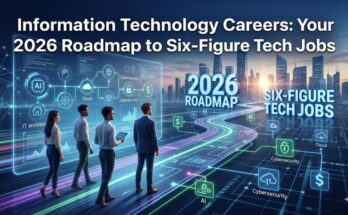
📸 AI Image Generation Prompt:
“Modern diverse IT professionals collaborating in a futuristic tech office with holographic displays showing cloud architecture diagrams, cybersecurity dashboards, and data analytics. Young professionals in business casual attire working with multiple monitors, tablets, and VR headsets. Warm lighting, glass walls, plants, standing desks. Professional photography style, 4K quality, representing information technology careers, innovation, and teamwork. USA corporate environment.”